


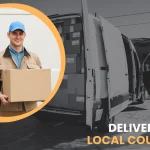
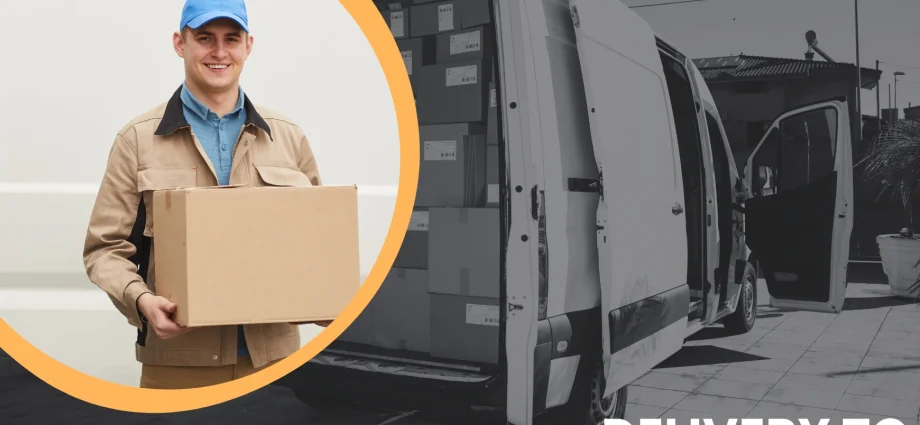
Let’s be honest—we’ve all been there. You need a last-minute ingredient for dinner, a specific tool for a home repair, or a prescription when you’re feeling under the weather. Driving across town feels like a chore, and the big-box delivery apps take days or charge a small fortune. That gap, that tiny sliver of space between immediate need and convenient solution, is where the hyper-local delivery service with a pickup option thrives.
Here’s the deal: this isn’t about competing with Amazon or DoorDash on a national scale. It’s about weaving your business into the fabric of a neighborhood. Think of it as the digital-age version of the corner store, but with wheels and a smart phone. The economics can be surprisingly sound if you get the logistics right. And that’s exactly what we’re going to unpack.
Mapping Your Territory: The Hyper-Local Mindset
First, define “hyper-local.” For this model, it’s typically a 3 to 5-mile radius. Maybe it’s a few interconnected suburbs, a dense urban neighborhood, or a large college campus. You know, the kind of area where you might actually run into your customers at the grocery store. This constrained geography is your superpower—it keeps fuel costs low, delivery times lightning-fast (think 30-60 minutes), and allows for a personal touch that giants can’t replicate.
The “with a pickup” part is crucial. It’s not just an add-on; it’s a strategic lever. Offering a discounted rate for customers who can swing by your micro-fulfillment point—a small warehouse, a retail backroom, even a converted garage—does two things. It improves your margin on that order and reduces the density of stops for your drivers, making their routes more efficient. It turns a simple delivery service into a hybrid logistics hub.
Crunching the Numbers: The Startup Economics
Alright, let’s talk money. The barrier to entry is lower than you might think, but the financial model requires a watchmaker’s precision. Your costs fall into a few key buckets:
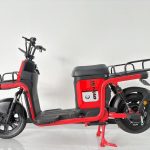
- Transportation: Will you use personal vehicles (with proper insurance!), lease a dedicated fleet, or start with a couple of e-bikes or cargo bikes for truly green, dense urban zones? Factor in fuel, maintenance, and insurance.
- Storage/Pickup Point: Rent for a small, accessible unit. This is your nerve center. It doesn’t need to be pretty, but it needs to be secure and organized.
- Technology: The backbone. You’ll need a simple website, a way for customers to order (a basic app or web portal), and a dispatch system. Thankfully, there are affordable SaaS solutions for this now—you don’t need to build from scratch.
- Inventory (If Applicable): Will you hold any stock? Some services start as pure pick-up-and-deliver agents for existing stores. Others find a niche by stocking high-demand, high-margin convenience items themselves. The latter has higher cost but also higher control.
- Labor: Yourself at first, then potentially part-time drivers. Consider contractor vs. employee models carefully—it’s a big legal and economic decision.
Revenue comes from delivery fees, pickup discounts, potential markups on goods, or a monthly subscription for unlimited deliveries (“The Neighborhood Pass”). The sweet spot? Finding a fee that feels fair for the incredible convenience you provide—often $5-$10 for delivery, with a $2-$3 discount for pickup.
A Sample P&L Snapshot for Your First Month
| Item | Cost/Income | Notes |
| Storage Unit Rent | $300 | 10’x10′ unit on the edge of your zone |
| Fuel & Vehicle Costs | $450 | Based on 500 miles of local driving |
| Tech Platform Subscription | $150 | Basic dispatch & ordering system |
| Marketing (Flyers, Social Ads) | $200 | Hyper-targeted to your ZIP codes |
| Total Estimated Costs | $1,100 | |
| Delivery Fees (200 orders) | $1,400 | Avg. $7/fee |
| Pickup Discount Fees (50 orders) | $100 | Avg. $2/fee |
| Product Markup (if applicable) | $150 | On select convenience items |
| Total Estimated Revenue | $1,650 | |
| Gross Profit | $550 | Before your own salary |
This is a simplified view, of course. But it shows the levers. More pickups boost your margin. More deliveries increase revenue but also fuel costs. It’s a balancing act.
The Dance of Logistics: Making It All Run Smoothly
Economics look good on paper. Logistics are where you live or die. This is the daily dance. Imagine it as a game of real-time Tetris, with packages, people, and perishables.
1. Partnering with Local Businesses
Your secret weapon. Don’t see local shops as competitors; see them as your inventory warehouse. Formal partnerships with a pharmacy, a hardware store, a boutique grocery, and a few popular restaurants mean you don’t have to stock everything. You become their delivery arm. You get a commission, they get increased sales without adding staff, and the customer gets everything from one place. It’s a classic win-win-win.
2. The Pickup Hub Flow
Your pickup point must be idiot-proof. Well-signed, with clear parking or stopping access. Use a simple system: order online, get a confirmation code, swing by, grab your pre-sorted package from a shelving unit. Maybe there’s a self-service kiosk for impulse buys—batteries, snacks, local honey. This isn’t just a cost-saver; it’s a customer touchpoint. A quick, friendly “How’s it going?” from you builds more loyalty than a dozen app notifications.
3. Routing and Timing – The Daily Puzzle
You’ll quickly learn your area’s rhythms. School drop-off times create traffic snarls. The lunch and dinner rushes are predictable. Good dispatch software will batch orders by zone, but sometimes the human eye sees a better route. The goal is to avoid the dreaded “one delivery across the zone” trip. Batch, batch, batch. And always, always communicate. A text saying “Your order is on the van, next stop is 15 min away” is pure gold in terms of customer satisfaction.
The Human Element: It’s What You’re Really Selling
In the end, you’re not selling delivery. You’re selling time, peace of mind, and community connection. That’s your moat against the big players. People will pay a bit more to know their order is handled by a neighbor, not a gig worker racing against an algorithm for a tip.
Your driver remembers that Mrs. Jenkins prefers her groceries left on the porch bench. You notice when someone orders cold medicine and you add a couple of complimentary tea bags to the bag. That stuff? It’s marketing you can’t buy. It turns a transaction into a relationship.
Starting a hyper-local delivery service with a pickup is a grind, sure. It’s about solving a thousand tiny logistical puzzles every week. But the economics work because you’re ruthlessly efficient in a small pond. And the logistics become manageable because the scale is human. You’re not building a unicorn startup; you’re building a vital, modern utility for your own neighborhood. And in a world that often feels too big and too impersonal, that’s a business worth building.