



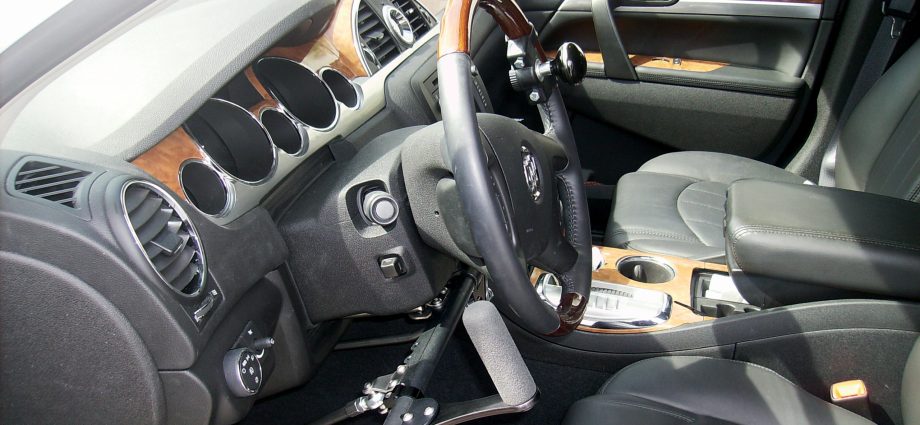
Let’s be honest: the freedom to drive is something many of us take for granted. It’s the simple joy of a spontaneous road trip, the practicality of running errands, or the quiet peace of a solo commute. But for individuals with disabilities, that freedom can feel like a distant dream, locked behind a steering wheel that doesn’t accommodate them.
Well, here’s the deal. That dream is far more attainable than you might think. A whole world of adaptive vehicle technology and thoughtful accessibility solutions exists—and it’s evolving faster than ever. This isn’t just about “special equipment.” It’s about reimagining the driver’s seat to fit the person, not the other way around.
It Starts with Assessment: The First Crucial Step
Before diving into gadgets and modifications, there’s a non-negotiable first step. Anyone with a disability looking to drive needs a professional assessment. This is typically done by a Certified Driver Rehabilitation Specialist (CDRS). Think of them as your mobility co-pilot.
They don’t just check your license. They evaluate your specific physical, cognitive, and visual abilities. They’ll ask: What are your goals? What’s challenging? Then, they recommend the precise adaptive driving equipment and vehicle modifications you need. Seriously, skipping this step is like trying to build a house without a blueprint.
The Toolkit: Common Adaptive Driving Aids
So, what’s actually out there? The range is vast, from simple mechanical aids to complex electronic systems. They generally fall into a few key categories.
Primary Controls: Steering, Accelerating, and Braking
For drivers with limited or no use of their legs, hand controls are the most well-known solution. These systems transfer the gas and brake functions to a lever or ring near the steering wheel. But even here, there’s variety—push/pull systems, right-angle pulls, or electronic “fly-by-wire” setups that require minimal force.
Steering can be tackled with spinner knobs (a classic), tri-pin handles for a secure grip, or even reduced-effort steering systems that make turning the wheel feel effortless. For those with very limited upper body strength, joystick driving controls integrate acceleration, braking, and steering into a single, intuitive device—often used in conjunction with a wheelchair-accessible vehicle.
Secondary Controls: Everything Else in the Cabin
You’ve solved the driving part. Now, what about the turn signal, headlights, wipers, or climate control? This is where electronic secondary control systems shine. A centralized touchpad, voice-activated system, or even a smartphone app can put every vehicle function at your fingertips—or, well, at your voice command.
It’s a game-changer. No more awkward stretching or fumbling for a stalk. Just a simple tap or a spoken command like, “Turn on defrost.”
Vehicle Access: Getting In and Out Gracefully
For wheelchair users, the vehicle itself often needs modification. The most significant decision is between a full-size van with a ramp or lift and a converted SUV or minivan. Each has pros and cons.
| Feature | Full-Size Van | Converted Minivan |
| Entry Method | Often a side or rear lift, or a ramp. | Typically a lowered floor & fold-out ramp. |
| Interior Space | Abundant. Often allows driving from your wheelchair. | More compact. Usually requires transferring to the driver’s seat. |
| Driving Feel | Like driving a larger vehicle. | Closer to a standard vehicle experience. |
| Parking | Can be challenging in tight spaces. | Easier for daily use and garages. |
The choice hinges on your lifestyle, strength, and preference. Do you want to drive from your chair, or are you comfortable transferring to a custom driver’s seat? A CDRS can help you test both.
Funding and Resources: Navigating the Financial Roadblocks
Okay, let’s talk about the elephant in the room: cost. Adaptive equipment and vehicle modifications are a significant investment. But don’t let sticker shock park your plans. Numerous resources can help:
- Vocational Rehabilitation (VR) Agencies: State VR programs often fund modifications if driving is essential for your employment.
- Veterans Affairs (VA): For eligible veterans, the VA is a primary source for funding adaptive automotive equipment.
- Non-Profit Organizations: Groups like the National Mobility Equipment Dealers Association (NMEDA) offer guidance, and some charities provide grants.
- Automaker Programs: Most major automakers have a mobility reimbursement program that offers a financial allowance (often up to $1,000) toward the cost of adaptations on a new vehicle.
It’s a puzzle, for sure. But piece by piece, funding often comes together.
The Future is (Almost) Here: Emerging Trends
Honestly, the horizon is the most exciting part. We’re on the cusp of technologies that will redefine accessible driving. Autonomous vehicles, for instance, promise a future where the car does the driving for everyone. But we’re not quite there yet.
More immediately, advanced driver-assistance systems (ADAS)—like lane-keeping assist, adaptive cruise control, and automatic emergency braking—are becoming standard. For many drivers with disabilities, these features aren’t just conveniences; they’re critical tools that reduce fatigue and enhance safety, acting as a co-driver of sorts.
And then there’s universal design. A growing push for vehicles designed from the ground up to be more inclusive—with easier entry points, configurable interiors, and seamless tech integration—could make aftermarket modifications less drastic and more affordable. That’s the dream, anyway.
Shifting Perspectives: It’s About Capability, Not Limitation
At its heart, this isn’t a story about technology. It’s a story about human ingenuity meeting human need. Every spinner knob, every voice command, every ramp is a key that unlocks a world of potential. It’s about reclaiming agency. The road to independence isn’t always smooth—it has its bumps, its financial potholes, its bureaucratic detours.
But the destination? It’s worth it. It’s the open road, on your own terms. It’s the simple, profound act of going where you want, when you want. And that, you know, is a kind of freedom that changes everything.