




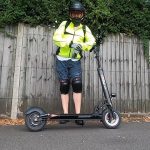


Let’s be honest. The sudden arrival of e-scooters on our city streets felt a bit… chaotic. It was like inviting a new, energetic guest to a party without clearing any space for them to dance. They ended up weaving through traffic, bumping over sidewalks, and sometimes just… lying down on the job in the middle of the pavement.
But here’s the deal. The scooters themselves aren’t the problem. The real issue was that our cities were built for two main modes: cars and pedestrians. We forgot about the in-between. The “micromobility” gap.
Now, some forward-thinking cities are playing catch-up. And they’re showing us what it looks like to get scooter-friendly infrastructure right. It’s not just about paint on pavement. It’s about reimagining the flow of urban life.
The blueprint for success: more than just a bike lane
You might think, “Well, just put them in the bike lane.” And sure, that’s a start. But scooters have different needs—different acceleration, braking, and frankly, a different user profile often. The best cities are designing with these specifics in mind.
1. Dedicated, protected micromobility lanes
This is the gold standard. Think of it as a dedicated express lane for smaller, greener transit. Paris is a stunning example here. Their massive investment in the Réseau Express Vélo (REV) – a network of segregated, car-free highways for bikes and scooters – has been a game-changer. It’s not a skinny strip next to roaring traffic; it’s a proper, safe corridor.
This separation is key. It reduces conflict points—those nerve-wracking moments where cars turn across your path. It gives riders confidence. And when people feel safe, more people ride. It’s that simple.
2. Smart parking and charging hubs
The infamous “sidewalk litter” of scooters was a huge public complaint. Innovative cities tackled this head-on with designated parking. But they’ve gone beyond a painted box.
Take Barcelona. They’ve implemented mandatory scooter parking zones, or aparcamientos, in certain districts. No parking in the zone? The scooter won’t physically end your ride. You’re incentivized to do the right thing. Austin, Texas, has created “mobility hubs” in partnership with private companies. These are centralized spots with racks, sometimes even charging, for scooters, bikes, and ride-share pickups. It tidies the streets and makes multi-modal trips a breeze.
Cities leading the charge (pun intended)
So who’s actually doing this well? A few names consistently pop up, each with a slightly different approach.
| City | Key Infrastructure Move | The Impact |
| Copenhagen | Extensive, curb-protected cycle tracks used by scooters. Integrated traffic signals. | Over 60% of all trips to work/study are by bike or scooter. Safety is phenomenal. |
| Berlin | “Pop-up” bike lanes widened during pandemic, now permanent. Clear signage for e-scooters. | Rapid adaptation of space, reducing car lanes and boosting micromobility uptake. |
| Portland, Oregon | Early adopter of regulated scooter programs with strict parking rules and slow-speed zones. | High compliance rates, lower conflict complaints, and valuable data for planning. |
| Singapore | National network of park connectors (greenways) for active mobility, plus marked on-road lanes. | Scooters are part of a holistic “car-lite” vision, connecting neighborhoods seamlessly. |
What’s fascinating is the common thread: these cities see scooters not as a nuisance to manage, but as a legitimate piece of the transportation puzzle. They’re planning for them.
The subtle art of integration: signage, surfaces, and speed
Great infrastructure lives in the details. It’s the stuff you might not notice at first, but your ride feels smoother, more intuitive because of it.
- Clear Signage & Road Markings: Cities like Vienna use specific icons for e-scooters alongside bikes. They mark conflict zones with bright paint and have “mixing zones” at intersections that clearly designate where each user should be. It reduces guesswork and hesitation.
- Thoughtful Surface Materials: Ever hit a slick metal plate or a jagged pothole on a scooter? It’s terrifying. The best-maintained lanes use smooth, durable asphalt. They ensure construction plates are non-slip. It’s a basic comfort and safety issue that makes a world of difference.
- Geofencing for Speed Management: This is digital infrastructure. Cities work with operators to create slow-speed zones (e.g., 10 mph in crowded parks) and no-ride zones (e.g., dense pedestrian plazas). The scooter automatically slows down when you enter. It’s a powerful tool for managing behavior without putting up a physical barrier.
Honestly, these details signal respect. They tell scooter users, “You belong here, and here’s how to navigate safely.” And they tell pedestrians, “Your space is protected.”
The road ahead: challenges and the human element
It’s not all smooth sailing, of course. Cities still grapple with equity—ensuring these nice new lanes serve all neighborhoods, not just the affluent ones. There’s the eternal debate about helmet use and regulation. And, you know, funding. This stuff costs money.
But the cities getting it right are those that understand the core principle: design shapes behavior. Wide, inviting, protected lanes encourage calm, predictable riding. Chaotic, narrow, or non-existent infrastructure breeds… well, chaos.
They’re also not afraid to experiment. To try a “pop-up” lane for six months and see if it works. To convert underused parking spaces into scooter corrals. To listen to data and resident feedback—from all users, drivers, walkers, and riders.
The goal isn’t a city overrun by scooters. It’s a city where you have a genuine, safe, and pleasant choice. Where hopping on a scooter for that 1-2 mile trip to the cafe or train station feels as natural—and as seamlessly integrated—as walking down a good sidewalk.
That’s the real shift. From seeing scooters as a tech disruption to treating them as a piece of urban fabric. The cities leading the way are stitching them in, thoughtfully. And the pattern they’re creating looks a lot like a smarter, cleaner, more lively kind of street.