





Let’s be honest. The dream of working from anywhere—with a dashboard view of a mountain range instead of a cubicle wall—is more achievable than ever. But merging overlanding with remote work isn’t just about throwing a laptop in your passenger seat. It’s a deliberate dance between rugged adventure and professional reliability.
Here’s the deal: we’re going to break down the practical, no-fluff guides you need to build a mobile office that can handle a dirt road and a video call with equal grit. No perfect symmetry here, just real talk from the field.
The Foundation: Your Vehicle as a Mobile Basecamp
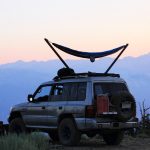
Before we dive into tech, you’ve gotta have a solid foundation. Your vehicle is more than transport; it’s your shelter, your power grid, your storage unit. The choice between a built-out 4×4, a van, or even a capable SUV with a rooftop tent matters less than your approach to systems thinking.
Power: The Lifeline of Remote Work
This is, without question, the most critical system. Running out of battery isn’t just an inconvenience—it’s a workday killer. A reliable overlanding power system is a layered approach.
- Primary Battery (Starter): Isolate it. Use a battery isolator or DC-DC charger to protect your main vehicle battery from being drained by your “house” needs. You never want to be stuck in the backcountry with a dead engine.
- Secondary (Auxiliary) Power: This is your workhorse. Lithium (LiFePO4) batteries are the gold standard now—lighter, more efficient, and they last way longer than old AGMs. A 100Ah lithium battery is a fantastic starting point.
- Recharging: Don’t rely on one method. Combine them. A DC-DC charger tops you up while driving. Solar panels are absolute game-changers for stationary camp days—a 200W flexible panel is a sweet spot. And sure, a small inverter generator can be a backup, though it’s noisy and less… serene.
Think of it like a water catchment system. You’re collecting from multiple sources (sun, alternator) into a sturdy tank (your aux battery) so you always have a reserve.
Connectivity: Finding Signal in the Silence
This is the other major pain point. You can have all the power in the world, but without data, you’re just on a very scenic vacation. Here’s a practical, multi-layered strategy for internet connectivity while overlanding.
| Tool | Purpose | Real-World Tip |
| Smartphone Hotspot | Primary, easy access. Good for emails, light tasks. | Use a signal booster app to find the best carrier tower direction. Honestly, this is step one. |
| Dedicated Cellular Hotspot | More stable, often better antennas. Saves phone battery. | Get plans from multiple carriers (e.g., AT&T & T-Mobile). One will often work where the other fails. |
| Signal Booster (Weboost, etc.) | Pulls in weak signals from miles away. Crucial for canyon or forest work. | It won’t create signal where none exists, but it can turn “no bars” into “one bar that works.” A lifesaver. |
| Starlink RV | Revolutionary for true off-grid work. High-speed, low-latency almost anywhere. | The power hog. You’ll need a robust battery/solar setup to run it for a full workday. But my goodness, it changes everything. |
Building Your Mobile Office: Ergonomics & Mindset
Okay, you’ve got juice and a link to the world. Now, where do you actually work? This is where vehicle-based remote work setups often stumble. That hunched-over-the-center-console life will wreck your back in a week.
- The Seat-Swivel Solution: If you’re in a van or SUV, swiveling the passenger seat 180 degrees to face the rear creates an instant office nook. Pair it with a small, portable lap desk.
- The Dedicated Desk: Many overland builds incorporate a slide-out or fold-down desk surface. The key is height and monitor placement—your screen should be at eye level. A laptop stand is a cheap, essential fix.
- Outside Option: A sturdy folding table and a quality camp chair under an awning. It sounds simple, but the separation of “work space” from “living space” is a massive mental boost.
The “Deep Work” Dilemma
Let’s talk mindset. The biggest challenge isn’t tech—it’s focus. You’re in this stunning place, and you have to ignore it for hours. It’s a weird tension.
Structure your day like the terrain. Block out focused, “deep work” periods during your most productive hours—maybe early morning when light is perfect and distractions are minimal. Then, take a proper, adventurous break. A midday hike. A swim. Then, tackle lighter tasks (emails, admin) later. This rhythm, this segmentation, is what makes the lifestyle sustainable, not just a photo op.
Gear & Systems: A Non-Exhaustive Checklist
Beyond the big items, it’s the little things that smooth out the edges. Here’s a quick, practical guide to the supporting cast.
- Power Management: A bluetooth-enabled battery monitor. Knowing your exact state of charge eliminates anxiety. A quality power station (like a Jackery or EcoFlow) can be a great modular supplement for running smaller devices.
- Data Management: Large, rugged external SSDs for backups. Cloud syncs are great, but they wait for signal. Have a physical backup of critical files.
- Climate Control: A 12V fan or a small, efficient heater (like a diesel heater). Trying to type with numb fingers or in a sweatbox is… unproductive.
- Lighting: A dedicated, dimmable task light for your work area. Headlamps are for camp, not for straining your eyes on spreadsheets.
- Redundancy: Extra charging cables, a power bank for your phone, a notebook and pen. Tech fails. Have analog backups.
Wrapping Up: The Philosophy of the Road Office
In the end, building a practical overlanding and remote work setup is an exercise in intentional compromise. You’re trading the sterile reliability of a traditional office for freedom, sure, but you’re also accepting a new set of variables—weather, terrain, a fleeting signal bar.
The goal isn’t to perfectly replicate your home desk. It’s to create a sufficient platform—one that’s resilient, adaptable, and lets you close the laptop at the end of the day to a view that makes all the troubleshooting worth it. It’s about building systems so robust that they fade into the background, leaving you present for both the work and the wonder. That’s the real destination.