



Picture this: you’re driving down the highway, coffee in the cupholder, when a rock kicks up and cracks your windshield. Annoying, sure. But here’s the thing most people don’t realize — that crack isn’t just a cosmetic problem. It could throw off your car’s entire advanced driver-assistance system, or ADAS. And fixing it? Well, it’s not the simple glass swap it used to be.
Modern vehicles are basically computers on wheels. They see the road through cameras, radar, and lidar sensors mounted in strategic spots — often right behind the windshield. So when that glass gets replaced, those sensors need recalibration. Otherwise, your lane-keeping assist might drift, or your automatic emergency braking could misjudge distances. Not ideal.
Let’s break down what’s actually involved here — the parts, the process, and why windshield replacement has become a much bigger deal than it used to be.
Why ADAS Sensors Live Behind Your Windshield
Automakers place forward-facing sensors in the upper center of the windshield for good reason. It’s the best vantage point — a clear, unobstructed view of the road ahead, kind of like a lookout tower. Cameras there monitor lane markings, detect pedestrians, read traffic signs, and help with adaptive cruise control.
But here’s the catch: those sensors are incredibly sensitive to their position. Even a tiny shift of a few millimeters can skew what they “see.” And when you replace a windshield, the new glass — even if it’s the exact same model — might sit slightly differently. The mounting brackets, the angle, the thickness… all of it matters.
That’s why calibration isn’t optional. It’s essential.
The Key ADAS Sensor Calibration Parts You Should Know
When we talk about ADAS sensor calibration parts, we’re really talking about the components that make the system work — and the tools needed to realign them after a windshield swap. Here’s a rundown.
1. The Camera Module and Bracket
This is the heart of the forward-facing system. The camera sits in a bracket that’s either attached to the windshield itself or to the car’s body. Some brackets are reusable; others come pre-attached to the new glass. If the bracket is bent or the adhesive fails, you’re looking at a replacement part — not just a recalibration.
2. Radar Sensors
Radar units often live behind the grille or bumper, but some vehicles use them in conjunction with windshield-mounted cameras. While they’re not always affected by glass replacement, a collision that cracks the windshield might also knock these out of alignment. Worth checking.
3. Lidar Units (Less Common, But Growing)
Lidar is still rare in mainstream cars, but it’s popping up more in higher-end models. These sensors use laser pulses to map the environment. If your car has one behind the windshield, calibration is non-negotiable after replacement.
4. Calibration Targets and Fixtures
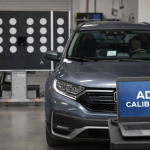
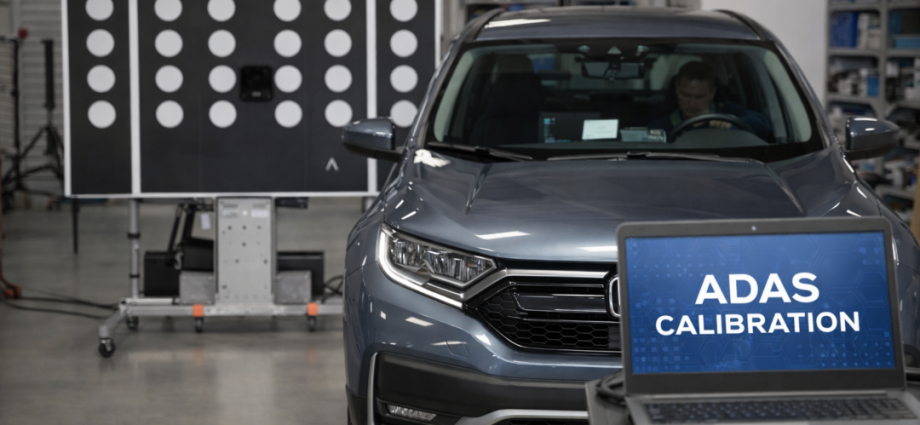
These aren’t parts of your car, but they’re critical tools. Shops use large, patterned boards — think giant QR codes — placed at specific distances. The system “looks” at these targets to recalibrate its aim. Without them, you’re just guessing.
5. Windshield With Pre-Installed Mounting Hardware
Many replacement windshields now come with the camera bracket already bonded. This reduces installation error, but it also means the glass itself is a precision part. Cheap aftermarket glass? Honestly, it can cause calibration headaches. The optical clarity and curvature need to match OEM specs.
Static vs. Dynamic Calibration: What’s the Difference?
You’ll hear these two terms tossed around. Here’s the plain-English version.
- Static calibration happens in a controlled shop environment. The car sits in front of those target boards, and a technician runs a computer program. Everything is measured, aligned, and verified. It’s precise but takes time and space.
- Dynamic calibration happens on the road. The technician drives the car at specific speeds, often on a clear highway with visible lane markings, while the system self-adjusts. Sounds easier, right? But it requires ideal conditions — good weather, daylight, and a cooperative road. Not always possible.
- Do you perform static and dynamic calibration?
- Do you have OEM-level targets and scan tools?
- Will you provide a pre- and post-scan report?
- Are your technicians certified for ADAS work?
Some vehicles need both. And if a shop skips calibration entirely? Your ADAS might throw warning lights, or worse, it could fail silently. You won’t know it’s misaligned until you need it — and by then, it’s too late.
Why Windshield Replacement Triggers Calibration
Let’s get into the nitty-gritty. When the old glass comes out, the camera’s world shifts. Even if the new windshield is identical in brand and part number, the installation process introduces variables. Adhesive thickness, curing time, ambient temperature — all of it can nudge the camera’s angle by a fraction of a degree.
And a fraction of a degree, at highway speed, translates to feet of error. Your lane departure warning might think you’re drifting when you’re not. Or it might miss a real drift. That’s the scary part.
Plus, many modern windshields have a special coating or tinted area around the camera. If that’s not exactly right, the camera’s exposure gets thrown off. It’s like trying to take a photo through a smudged lens — everything looks a little off.
Parts That Often Get Replaced Alongside the Windshield
Windshield replacement isn’t just glass. Here’s what else might need swapping:
| Part | Why It Matters |
|---|---|
| Camera bracket | Bent or broken brackets can’t hold the sensor steady |
| Adhesive kit | OEM-specified urethane ensures proper bonding and curing |
| Molding and trim | Old clips and seals often break during removal |
| Rain/light sensor | Sometimes integrated into the windshield; needs transfer or replacement |
| Calibration targets | Not installed on car, but required for the service |
Notice how many of these are precision items. That’s not an accident. The whole system is interdependent.
The Cost Factor (And Why It’s Worth It)
Sure, a basic windshield replacement used to cost a couple hundred bucks. Now, with calibration, you might see quotes from $500 to over $1,200 — depending on the vehicle and the shop’s equipment. Luxury brands and EVs tend to sit at the higher end.
But here’s the deal: skipping calibration to save money is like buying a smoke detector and never putting in batteries. The system is there, but it won’t work when it counts. And if you’re in an accident where ADAS should have intervened, that skipped step could become a liability issue.
Insurance companies are catching on, too. Many now require proof of calibration before covering a claim related to ADAS failure. So, honestly, it’s not just about safety — it’s about protecting yourself legally and financially.
What to Look for in a Shop
Not every glass shop has the gear or training for ADAS calibration. When you’re calling around, ask point-blank:
If they hesitate or say “we just install the glass,” walk away. Seriously.
The Road Ahead
ADAS technology is only getting more complex. More sensors, more integration, more reliance on that piece of glass in front of your face. Windshield replacement has evolved from a commodity service to a precision repair — one that demands the right parts, the right tools, and the right know-how.
So next time you see a chip or crack, don’t just think “annoying.” Think “calibration.” Because your car’s ability to see the road depends on it. And you deserve a system that works exactly as designed — no guesswork, no shortcuts.