






There’s a certain smell to a classic car garage—a mix of old grease, stale gasoline, and optimism. You know, that kind of optimism that hits you when you’ve just scored a rusted hulk of a 1967 Mustang for a steal. But then comes the reality check. You pop the hood, and there it is: a brittle, cracked plastic clip that hasn’t been manufactured since the Nixon administration. For decades, that little piece meant a dead end. Now? Well, now we just fire up a 3D printer and make it. Honestly, it’s a bit like magic, but with more layer lines.
Let’s dive into how additive manufacturing is quietly rewriting the rulebook for restorers, hobbyists, and even professional shops. This isn’t about printing a whole chassis—not yet anyway. It’s about those impossible-to-find bits that stop a project dead in its tracks.
The Old Way: Chasing Ghosts in Junkyards
Before we sing praises for the printer, let’s remember the pain. The old way involved scouring eBay at 2 a.m., calling salvage yards in rural Montana, and paying insane prices for a used part that was already 50 years old and probably just as fragile as the one you’re replacing.
I remember a friend who restored a 1972 Triumph TR6. He spent six months hunting for a simple heater control valve bracket. SIX MONTHS. When he finally found one, it cost him $180 and arrived with a hairline crack. That’s the kind of frustration that makes grown men cry into their toolboxes.
And sure, there’s the NOS (New Old Stock) route. But that’s a gamble too. Those parts have been sitting on a shelf since 1975, and plastic degrades, rubber hardens, and metal sometimes corrodes even in sealed boxes. The scarcity problem isn’t just about finding a part—it’s about finding one that’s actually usable.
Enter the 3D Printer: A Digital Junkyard
Here’s the deal: 3D printing flips the entire concept of spare parts on its head. Instead of hunting for a physical object, you hunt for a digital file. Once you have that file—or better yet, once you model it yourself—you can produce the part on demand. Infinite copies. No waiting. No bidding wars.
But it’s not just about reproduction. It’s about improvement. You can reinforce a weak original design, use modern materials that resist UV rays or heat, and even add subtle structural tweaks that the factory never bothered with. That’s something a NOS part will never give you.
What Can You Actually Print? (More Than You Think)
Let’s get specific. The range of printable parts is expanding faster than a teenager’s Instagram following. Here’s a quick breakdown of what’s realistic today:
- Interior trim pieces: Dash vents, switch bezels, door handle surrounds, and those little screw covers that always vanish.
- Under-hood components: Fuse box covers, wire harness clips, radiator shrouds, and even some vacuum line fittings.
- Lighting housings: Tail light bases and marker light sockets (though you’ll still need to source the bulbs and lenses).
- Fluid system parts: Non-pressurized reservoirs, overflow tanks, and certain gaskets (with the right flexible filament).
- Emblems and badges: Yes, even those. You can print a perfect replica of a hood ornament, though chrome plating is a separate step.
Now, before you get too excited—no, you’re not printing a crankshaft or a transmission gear. Not yet. Metal printing exists, but it’s still pricey for the average home gamer. The sweet spot is in the “clips, brackets, and covers” category. The stuff that makes you scream when it breaks.
The Material Question: It’s Not All the Same Plastic
Here’s where people get tripped up. They buy a cheap printer, use the default PLA filament that comes in the box, and print a part for their engine bay. Then they wonder why it melts into a sad puddle after a thirty-minute drive. Well, that’s on you, friend.
Material selection is everything. Let’s break it down:
| Filament Type | Best For | Heat Resistance | Durability |
|---|---|---|---|
| PLA | Interior cosmetic pieces | Low (melts ~60°C) | Brittle, not for stress |
| PETG | Interior trim, some under-hood | Moderate (~80°C) | Good layer adhesion |
| ASA | Exterior parts, UV exposure | High (~100°C) | Excellent weather resistance |
| Nylon (PA) | Clips, latches, wear items | High (~120°C) | Tough, slightly flexible |
| Polycarbonate (PC) | High-heat engine bay parts | Very high (~130°C+) | Extremely strong |
For most classic car work, you’ll want to live in the ASA and Nylon territory. PETG is a decent starting point for non-critical stuff. But honestly, if you’re printing something near the exhaust manifold, you need polycarbonate or a specialized blend. Don’t skimp here—it’s the difference between a part that lasts a decade and one that fails on the first hot day.
Reverse Engineering: The Real Superpower
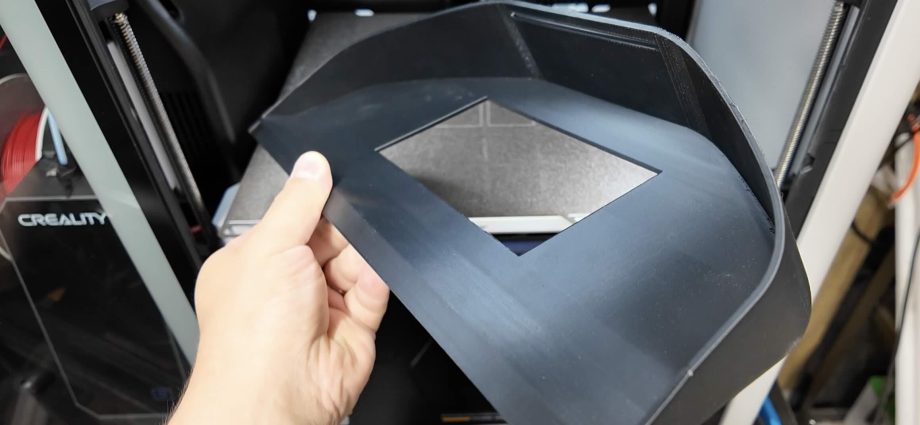
So you’ve got a broken part. What now? Well, the process is part detective work, part sculpture. You take the broken piece, clean it up, and either measure it with calipers or—if you’re fancy—scan it with a 3D scanner. Then you recreate it in CAD software.
Let me be honest: this part is not for everyone. Learning CAD is like learning a new language. It takes time, patience, and a fair amount of swearing at your screen. But here’s the beautiful thing—you don’t always have to start from scratch. Sites like Thingiverse and Printables have growing collections of classic car parts. Someone out there already modeled that weird wiper motor cover for your 1964 Impala.
And if you do model it yourself? Well, you become part of the solution. Upload it for the next guy. That’s the ethos of the community, you know? It’s like passing a wrench to a friend across the garage—just digital.
Cost Comparison: Is It Actually Cheaper?
Let’s talk money, because that’s what stops most projects. A used OEM dash vent for a 1971 Porsche 911? That’ll run you $250 to $400 if you can find one. A roll of ASA filament costs about $35 and can print roughly twenty of those vents. Even factoring in the cost of a decent printer ($300–$800 for a hobby-grade unit), the math gets compelling fast.
But there’s a hidden cost: your time. Printing a part takes hours. Modeling it takes even longer. If you value your time at zero (like most of us do on weekends), then yes, it’s dramatically cheaper. If you’re running a professional restoration shop, you might still find it worth it for those “unobtainium” parts that would otherwise leave a car stuck on a lift for months.
The Aesthetic Question: Will It Look Right?
Here’s the skeptic’s argument: “But it won’t look original.” And they’re not entirely wrong. A 3D-printed part has layer lines. It has a slightly different texture. It might not have the exact grain of injection-molded plastic from 1968.
But here’s the counterpoint—you can hide it. Sanding, priming, and painting with a textured finish can make a printed part nearly indistinguishable from the original. For interior pieces, you can use vinyl dye to match the factory sheen. And honestly, for a driver-quality restoration (as opposed to a Pebble Beach concours trailer queen), it’s more than good enough.
For the show judges? Well, that’s a different beast. Some concours events are strict about originality. But even they are starting to soften as the supply of NOS parts dries up. The rule of thumb is: if it’s visible and judged, you might still need the real thing. If it’s hidden behind a panel or under the dash, nobody will ever know—or care.
Durability Myths and Realities
People worry that printed parts are weak. That they’ll crumble like a stale cookie. And sure, a poorly printed part with low infill and weak layer adhesion will fail. But a properly printed part—with the right orientation, 100% infill, and appropriate material—can actually outlast the original.
Think about it: the original part was designed for mass production and cost cutting. It had thin walls and used the cheapest plastic available. Your printed version can have thicker sections, better fillets at stress points, and use a modern polymer that resists degradation. You’re not just replicating—you’re upgrading.
That said, don’t be a hero. Don’t print a motor mount or a suspension bushing. There’s a reason those parts are made of rubber and metal. Know your limits. If a part is safety-critical, buy the real thing or use a reputable reproduction. But for the annoying stuff? Print away.
The Future: Scanning Your Way to a Full Car
We’re at the tip of the iceberg, honestly. Photogrammetry apps on your phone can now create decent 3D models of parts without expensive scanners. That means you can walk into a junkyard, scan a pristine part, and then print copies at home. No need to even pull the part off the donor car.
And there are already efforts to create digital archives of entire classic car models. Imagine downloading a complete set of interior plastics for a 1965 Ford Thunderbird. Not just one vent—the whole dash assembly. That’s coming. It’s not a question of if, but when.
Some manufacturers are even getting in on the act. Porsche, for instance, has started printing NLA (No Longer Available) parts for their heritage program. They’re using industrial printers and scanning their own archives. But that’s for the rich folks. For the rest of us, the open-source community is doing the heavy lifting.