





There’s a moment—usually around mile 40 on a washboard dirt road, somewhere far past the last gas station—when you realize your stock vehicle just isn’t going to cut it. Maybe it’s the scraping sound of your bumper kissing a rock. Or the smell of your transmission getting a little too warm. Whatever it is, that’s the moment overlanding stops being a Pinterest board and becomes a genuine build project.
And honestly? That’s where the fun begins. Because overlanding isn’t just about driving somewhere remote. It’s about building a rig that can get you there, keep you comfortable, and—most importantly—bring you home. Aftermarket parts are the difference between a weekend camping trip and a genuine expedition into the middle of nowhere.
Let’s talk about what actually matters when you’re prepping a vehicle for remote travel. Not the mall-crawler stuff. The real gear.
Why Aftermarket Parts Aren’t Just “Nice to Have”
Factory vehicles are engineered for a compromise. They have to be. They need to handle grocery runs, highway commutes, and the occasional gravel driveway. That means suspension tuned for comfort, tires built for fuel economy, and clearance that’s… well, adequate. But “adequate” falls apart fast when you’re 80 miles from pavement.
Aftermarket parts let you specialize. You’re no longer bound by the lowest common denominator. Want suspension that soaks up corrugations like a sponge? You can have it. Want a bumper that shrugs off a kangaroo strike? Sure. Want to carry 20 gallons of extra fuel and a rooftop tent without sagging? Absolutely doable.
Here’s the deal: every remote mile you drive puts stress on your vehicle. Heat, vibration, dust, rocks, water crossings. The right parts don’t just add capability—they add reliability. And reliability is the only currency that matters when you’re far from help.
The Core Categories of Overlanding Upgrades
You don’t need everything. But you do need to think in systems. A lift kit without better tires is pointless. A winch without a proper bumper is dangerous. Let’s break down the essentials.
Suspension: The Backbone of Remote Travel
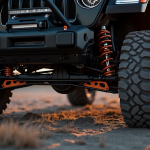
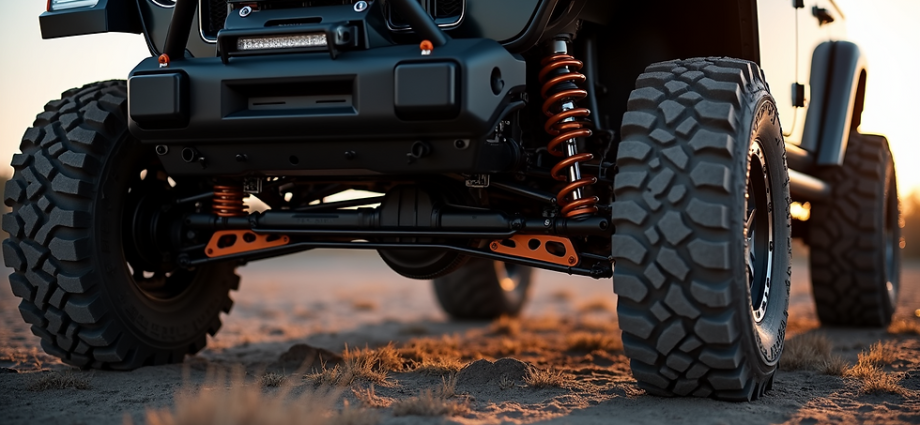
Your suspension does two jobs: keep the tires on the ground and keep your spine intact. Stock setups usually fail at both once you load up with gear. Upgraded shocks, springs, and control arms let you carry weight without bottoming out. They also improve articulation—that’s the fancy word for how well your wheels stay planted over uneven terrain.
Look for remote reservoir shocks if you’re doing long, hot, washboard-heavy routes. They dissipate heat better. And don’t skip the small stuff: bump stops, sway bar disconnects, and upgraded bushings all add up.
Tires and Wheels: Where the Rubber Meets the Dirt
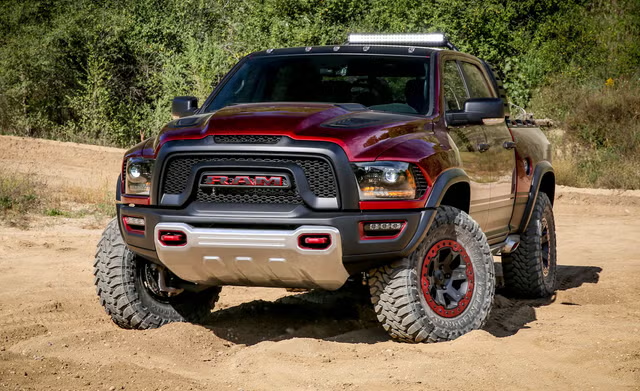
This is the single biggest bang-for-buck upgrade. A good all-terrain or hybrid tire changes everything. More grip. Better puncture resistance. And a sidewall that can handle airing down without pinching.
Pair them with lightweight, strong wheels—steel is cheap and tough but heavy; alloy is lighter but can crack. For remote travel, many folks run steel for field repairability. You can bash a steel wheel back into shape with a hammer. Good luck doing that with alloy.
Armor: Because Rocks Don’t Care About Your Paint
Skid plates, rock sliders, and differential guards. These aren’t glamorous. But they’re the difference between a dented oil pan and a very long walk. Aluminum skids save weight; steel skids take more abuse. Pick your poison based on terrain.
Rock sliders are especially underrated. They protect your rocker panels from ledges and also give you a high-lift jack point. Two birds, one stone.
Recovery Gear: The Stuff You Hope You Never Use
Winches, recovery boards, straps, shackles, and a proper jack. And here’s a hard truth: recovery gear is only as good as your knowledge. A winch without rigging skills is just a heavy paperweight. Practice before you need it.
For remote travel, consider a winch with synthetic line—it’s lighter and safer if it snaps. Recovery boards like Maxtrax or cheaper alternatives work wonders in sand, mud, and snow. And always, always carry a shovel. It’s the most used recovery tool in existence.
Power, Fuel, and Water: The Remote Travel Trifecta
You can have the most capable rig on the planet, but if you run out of fuel or water, you’re done. Aftermarket solutions here are less about performance and more about self-sufficiency.
- Auxiliary fuel tanks: Long-range tanks replace or supplement your stock tank. Some add 30+ gallons. That’s hundreds of extra miles.
- Dual battery systems: Isolate your starter battery from your accessories. Run fridges, lights, and chargers without waking up to a dead truck.
- Onboard water tanks: Mounted under the bed or inside the cab. Some have heaters for winter. Others have pumps and filtration.
- Solar panels: Portable or roof-mounted. They keep your batteries topped off during long camp days.
Sure, you can carry jerry cans and water jugs. But integrated systems save space, lower your center of gravity, and reduce the chance of spills. In fact, many overlanders say a dual battery setup is the first “real” upgrade they’d do again.
Storage and Organization: Chaos Is the Enemy
When you’re living out of your vehicle for weeks, clutter becomes dangerous. A flying cooler or loose tool bag can injure you in a sudden stop. Drawer systems, roof racks, and cargo barriers keep everything locked down.
But don’t overbuild. Every pound you add costs fuel and stresses components. A simple plywood drawer with locking slides can be better than a $2,000 aluminum system. Start with what you have. Upgrade as you learn.
Common Mistakes (and How to Avoid Them)
I’ve seen it all. The guy with 37-inch tires and stock gearing who can’t climb a hill. The couple with a rooftop tent and no awning in the desert sun. The solo traveler with a winch but no tree saver strap.
Here’s a quick table of pitfalls and fixes:
| Mistake | Why It Hurts | Better Approach |
|---|---|---|
| Big tires, stock gears | Sluggish power, transmission heat | Regear differentials to match tire size |
| No skid plates | One rock can end your trip | At least protect oil pan and transfer case |
| Overloading roof rack | High center of gravity, poor handling | Keep heavy items low and inside |
| Skipping recovery practice | Panic and injury when stuck | Take a class or practice in a safe area |
Budget vs. Premium: Where to Spend, Where to Save
You don’t need to drop $50k on a build. In fact, some of the most capable overland vehicles I’ve seen were built on a tight budget with smart choices.
Spend on: tires, suspension, and recovery gear. These are your lifelines. Save on: cosmetic mods, fancy light bars (unless you actually night-drive), and branded storage boxes. A $20 action packer works fine.
And please—don’t neglect maintenance. A well-maintained stock vehicle will outlast a neglected built one every single time. Change your fluids. Check your bearings. Grease your joints. Boring? Yes. Essential? Absolutely.
The Human Element: Skills Over Parts
Here’s something the aftermarket catalogs won’t tell you: the best upgrade is experience. You can buy every part on this list, but if you don’t know how to read terrain, judge a water crossing, or change a tire on a slope, you’re still a liability.
So take trips. Short ones first. Learn your vehicle’s limits and your own. The parts will follow naturally—guided by real needs, not forum hype.
Remote travel has a way of stripping away the unnecessary. It rewards simplicity, preparation, and humility. The right aftermarket parts don’t make you invincible. They just give you a fair shot. And out there, past the last paved mile, a fair shot is everything.