


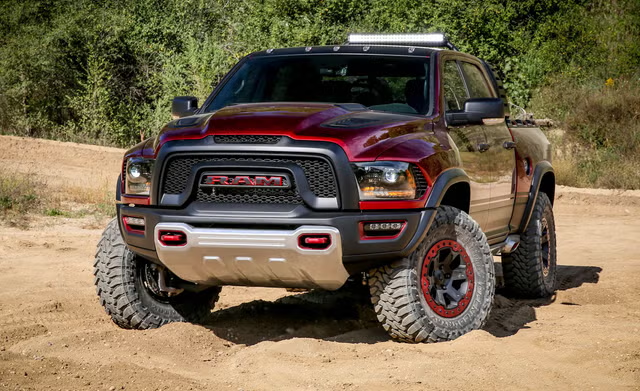


You’ve just dropped $80k on an electric truck or SUV. Maybe it’s a Rivian R1T, a Hummer EV, or even a converted Jeep Wrangler. You’re stoked to hit the slickrock, the mud, the talus fields. But then—that nagging thought creeps in. What happens when a jagged rock punches through the belly? Or when water sloshes up to the doorsill? That’s where off-road EV battery protection systems come in. Honestly, they’re not just accessories; they’re the difference between driving home and calling a flatbed.
Why battery protection is different for off-road EVs
Think of a standard EV battery pack as a delicate sandwich. It’s layers of cells, cooling plates, and wiring, all wrapped in a metal case. On pavement, that case is fine. But off-road? You’re asking that sandwich to survive a rock garden. And water? Sure, most EVs have an IP67 rating—meaning they can sit in a meter of water for 30 minutes. But that’s static water. Driving through a creek? The pressure differential can force water past seals. That’s a real problem.
Here’s the deal: off-road EV battery protection isn’t just about armor. It’s about thermal management, impact absorption, and sealing. You need a system that can take a hit, shed heat, and keep mud out. And it’s not a one-size-fits-all thing. Different terrains demand different solutions.
The anatomy of a battery protection system
Let’s break it down. A solid off-road EV battery protection system usually has three layers. Well, maybe four if you count the software. But we’ll get to that.
1. The skid plate: Your first line of defense
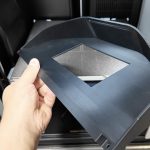
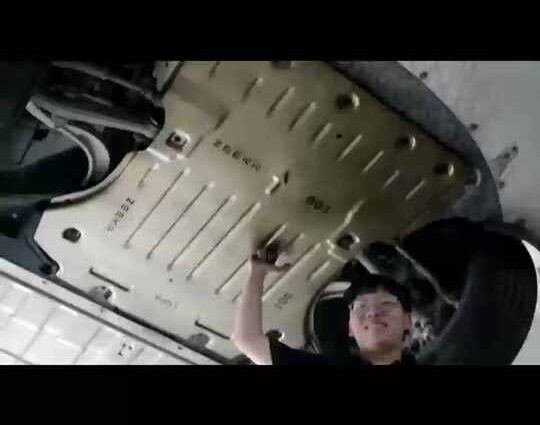
Skid plates are the obvious starting point. But not all skid plates are created equal. You want something that’s thick—like 3/16-inch aluminum or 1/4-inch steel. Aluminum is lighter, sure, but steel can take a sharper impact without cracking. Some aftermarket companies, like DirtKing or Rock Slide Engineering, make custom plates that bolt directly to the EV’s subframe. They cover the entire battery tray, not just the front.
But here’s a quirk: skid plates can trap heat. EV batteries generate heat during fast charging or hard acceleration. If you slap a solid metal plate underneath, you’re essentially insulating the pack. That’s why some systems use perforated plates or add thermal breaks—like a layer of ceramic coating or a small air gap. It’s a balancing act between protection and cooling.
2. Impact-absorbing materials: The unsung heroes
Under the skid plate, you might find a layer of foam or rubberized padding. This isn’t just for insulation. It’s designed to absorb energy from a hit. Imagine dropping a watermelon on concrete versus dropping it on a yoga mat. The mat spreads the force out. Same idea here. Some OEMs use aramid fiber sheets (like Kevlar) bonded to the battery case. Others use closed-cell foam that also helps with vibration dampening.
I’ve seen a few DIY builds where owners glue strips of conveyor belt rubber to the bottom of the pack. It’s ugly, but it works. The key is to avoid anything that can hold moisture against the case—that’s a corrosion risk.
3. Sealing and waterproofing: The sneaky challenge
Water is the silent killer. Not because the battery short-circuits—modern packs are pretty good at that—but because water can corrode connectors, freeze in winter, or carry silt that wears down seals. Off-road EV battery protection systems often include upgraded gaskets and breather valves. Some use a “dry-break” connector system, where the battery vents are routed to a high point in the chassis. That way, even if you submerge the vehicle, the battery breathes dry air.
There’s also the issue of pressure equalization. When you drive from sea level to 10,000 feet, the pressure inside the pack changes. Without a proper valve, the seals can distort. That’s why many off-road EVs now include Gore-Tex vents or similar membranes. They let air pass but block water droplets.
Thermal management: The part nobody talks about
You might think battery protection is all about physical shields. But heat is the real enemy. Off-road driving is slow, high-torque work. You’re crawling over rocks, spinning tires in sand, maybe winching. That draws huge current from the battery. And current equals heat. If the pack gets too hot, the BMS (battery management system) will throttle power. You lose torque. You lose momentum. You get stuck.
So, what do you do? Some aftermarket kits add extra cooling loops—like a secondary radiator for the battery coolant. Others use phase-change materials (PCMs) that absorb heat as they melt. Think of it like an ice pack that never needs freezing. It’s a passive system that kicks in when things get spicy. Not common yet, but it’s coming.
And then there’s the opposite problem: cold. In winter, a cold battery loses range and can’t deliver peak power. Some protection systems include heating pads or insulation blankets. The Rivian R1T, for example, has a “battery preconditioning” mode that warms the pack before you hit the trail. But that uses energy. It’s a trade-off.
What about the aftermarket scene?
The aftermarket for off-road EV battery protection is still young. But it’s growing fast. Companies like Baja Designs and Addictive Desert Designs now offer full underbody armor kits for the Ford F-150 Lightning and the GMC Hummer EV. Some are even modular—you can swap out a damaged skid plate without removing the whole thing.
But here’s a warning: don’t just bolt on any plate. The battery pack is structural in many EVs. It’s part of the chassis. Adding a heavy steel plate can change the vehicle’s crash dynamics. And if you drill into the wrong spot? You could puncture a coolant line or a high-voltage cable. Always check with the manufacturer or a certified installer.
Table: Comparing common protection materials
| Material | Weight | Impact resistance | Heat dissipation | Cost |
|---|---|---|---|---|
| Aluminum (3/16″) | Moderate | Good | Fair | $$ |
| Steel (1/4″) | Heavy | Excellent | Poor | $ |
| UHMWPE plastic | Light | Good (abrasion) | Very poor | $$$ |
| Carbon fiber composite | Very light | Excellent (directional) | Good | $$$$ |
| Rubber/foam laminate | Light | Moderate (energy absorption) | Insulates | $ |
Notice how nothing is perfect. Steel is cheap and tough but heavy and hot. Carbon fiber is light and strong but expensive and brittle if hit at a bad angle. Most off-road EV owners end up with a hybrid setup—aluminum skid plates with rubberized foam underneath.
Real-world testing: What the pros use
I talked to a guy who runs an off-road EV conversion shop in Arizona. He told me that the biggest failure point isn’t the battery case—it’s the connectors. Water gets into the high-voltage junction box, and suddenly you’ve got a $5,000 repair. His solution? He pots the connectors in silicone. It’s messy, but it works. He also uses a custom-made aluminum belly pan that doubles as a heat sink. The pan has fins that channel air when the vehicle is moving. Clever, right?
Another trend: some off-road racers are using “sacrificial” skid plates. These are thin, cheap aluminum sheets that you bolt on top of the main plate. When you hit a rock, the sacrificial plate takes the damage. You just replace it. It’s like a razor blade for your battery pack.
Software and sensors: The invisible protection
Don’t forget the digital side. Modern EVs have accelerometers and temperature sensors all over the battery pack. If the car detects a hard impact—like a rock strike—it can shut down the high-voltage system instantly. Some systems even log the impact location, so a technician knows exactly where to inspect. That’s a huge advantage over a gas truck, where you might not notice a dented fuel tank until it leaks.
But there’s a catch. These sensors can be too sensitive. I’ve heard stories of Rivians going into limp mode after a mild bump on a gravel road. The solution? Some aftermarket tuners offer “off-road mode” firmware that raises the impact threshold. It’s a bit hacky, but it works.
What to look for when buying a protection system
- Vehicle-specific fitment – Generic plates rarely cover the whole pack. Measure twice, buy once.
- Access to drain plugs – You need to be able to drain water or coolant without removing the armor.
- Thermal vents – Look for plates with slots or channels that allow airflow.
- Corrosion-resistant hardware – Stainless steel bolts, not zinc-plated. Trust me on this.
- Warranty – Some manufacturers void the battery warranty if you add aftermarket protection. Check first.
Oh, and one more thing: weight. A full steel underbody kit can add 200 pounds. That’s range loss. Aluminum saves weight but costs more. You gotta decide what matters more—protection or efficiency.
The future of off-road EV battery protection
We’re seeing some wild innovations. Self-healing coatings that seal small punctures. Active cooling systems that use the vehicle’s air conditioning to chill the battery during a hard climb. Even “exoskeleton” frames that wrap the entire battery pack in a cage. The Bollinger B1, before it was canceled, had a massive steel frame that protected the battery like a tank. That idea might come back.
And then there’s the modular battery approach. Imagine swapping out a damaged module instead of the whole pack. Some startups are working on that. It’s not here yet, but it’